Fast Sense are always looking for creative annd ambitious molecule management tasks and ready for challenges! Hire Us








Maritime Safety
SOL-06 · Maritime Safety
Hydrogen gas detection for ports, vessels, and shipping containers
Continuous monitoring for maritime battery and fuel cell systems
fixed point
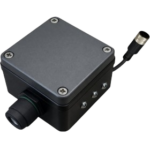
H2FAST™ FP-200
Ultra-compact fixed-point hydrogen detector with ppm-level sensitivity
Leak Detector
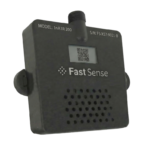
H2FAST™ BD-100
Ultra-compact 12 mm × 12 mm hydrogen leak detector designed for battery safety
- #MaritimeSafety
- #ShippingBatteries
- #PortSafety
- #VesselMonitoring
- #HydrogenDetection
Smart Sensing for Vessels
Advanced sensing for hydrogen storage, transport, and process systems
Continuous monitoring for maritime battery and fuel cell safety
Increase Safety at the Port with Sensors That Deploy with Ease and Scale
- Detect off-gassing.
- Predict failures at sea.
- Trigger port-side response.
Detect abnormalities. Predict degradation. Trigger maintenance.
Maritime electrification demands new safety standards:
As vessels transition to battery-hybrid and hydrogen fuel cell propulsion, the risk of thermal events in confined maritime environments grows significantly. Hydrogen (H₂) is released at the earliest stages of battery failure — long before smoke or heat is detectable.
From port to open water
Fast Sense brings real-time chemical intelligence to maritime battery installations. Our embeddable gas-analysis chip continuously monitors early off-gas events across vessel battery rooms, container terminals, and port-side energy storage — delivering actionable data to ship management systems and port safety networks.
Maritime Safety Applications
- Container Vessel Battery Rooms
- Port-Side Energy Storage Systems
- Shore Power Battery Banks
- Cargo Hold Gas Monitoring
- Engine Room Battery Backup
- LNG / Hydrogen Fuel Cell Vessels
- Port Terminal UPS Systems
- Offshore Platform Battery Systems
- Cruise Ship Energy Storage
- Ferry & RoRo Hybrid Propulsion
- Autonomous Vessel Power Systems
- Cold-Ironing Infrastructure
"Deploying Fast Sense across our fleet gave us real-time gas intelligence in the harshest conditions. It's a step-change in maritime battery safety."
Capt. Lars Eriksson
Fleet Safety Manager, Nordic Maritime Group
- Quick menu
- Overview
- Features
- Product Benefits
- Case Studies
- Contact
Built for harsh maritime conditions
Fast Sense operates 24/7 in high-humidity, salt-spray, and vibration-rich environments. With ultra-low power consumption, no heater, and no cross-sensitivity to other gases, it is engineered for deployment across vessels, ports, and offshore platforms.
Prevent incidents before they escalate
By identifying pre-thermal faults in battery compartments and fuel cell systems, Fast Sense enables vessels to isolate affected systems, activate suppression, or divert to port — reducing fire risk and protecting crew, cargo, and passengers.
Actionable data at ppm levels
Our embeddable gas-analysis chip continuously monitors off-gas events at ppm levels, feeding actionable data directly into vessel management systems, port safety networks, and classification society reporting frameworks.
Targeting:

UPS

ESS
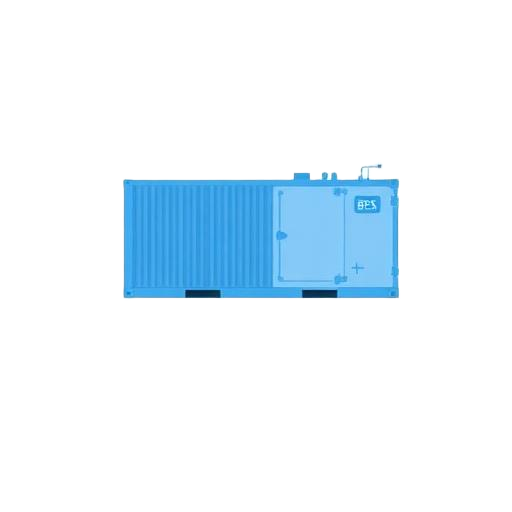
BESS

EV

AGV
fixed point
H2FAST™ FP-200
Ultra-compact fixed-point hydrogen detector with ppm-level sensitivity
Leak Detector
H2FAST™ BD-100
Ultra-compact 12 mm × 12 mm hydrogen leak detector designed for battery safety
Product Benefits
Purpose-built for maritime and port environments.
Eliminates False Alarms
Highly selective sensing technology targets hydrogen specifically — critical in noisy maritime environments.
Continuous Self-Calibration
Sensor verifies its own performance throughout its entire operational lifetime at sea.
Maritime Standards Compliance
SOLAS, IMO MSC.1/Circ.1455, IEC 60079, DNV GL, Lloyd's Register, ClassNK standards.
Flexible Installation
Junction box, DIN-rail, wall-mount, and magnetic mounting for vessel and port environments.
Multiple Interfaces
Dry potential-free contacts, 4–20 mA analog output, Modbus RTU (RS-485) for ship integration.
Long Service Life
10+ years designed to match or exceed the operational lifetime of most vessel battery systems.
Case Studies
CASE STUDY
Battery Recycling Safety
Safe dismantling and recycling of lithium-ion batteries from decommissioned vessels requires continuous hydrogen monitoring to detect thermal events during processing.
CASE STUDY
Battery Room Hydrogen Monitoring
Essential for early leak identification, safety monitoring, and prevention of fire or explosion risks. Low ppm detection enables early warning before hazardous thresholds.
Maritime Safety Monitoring
H₂ Detection Across Ports, Vessels & Containers
From container vessels to port-side energy storage, our ppm-level hydrogen sensors provide continuous monitoring for early fault detection. Each node feeds real-time data into the Molecule Management platform.
- Vessels
- Ports
- Containers

CH4
CH4
CH4
CH4
- Port Terminal
- 4 sensor placement
CH4
CH4
CH4
CH4
- Port Terminal
- 4 sensor placement
- 8 sensor placement
- Avg H₂: 19.3 ppm
- • All Normal
Why It Matters
Felicity Ace: Car Carrier Fire in the Atlantic
In February 2022, the car carrier Felicity Ace caught fire in the Atlantic Ocean carrying nearly 4,000 vehicles including EVs. Battery fires contributed to the vessel's loss, highlighting the need for early gas detection on cargo ships.
IMO Pushes for Stricter Battery Safety on Ships
The International Maritime Organization is accelerating regulatory frameworks for battery-powered vessels following a series of incidents, driving demand for continuous gas monitoring in engine rooms and battery compartments.
Targeting:
Sensor performance data, application insights, industry news, and product updates.
Start enquiry
Are you interested in our solutions? Then write us a message. Our sales team will be happy to help you.