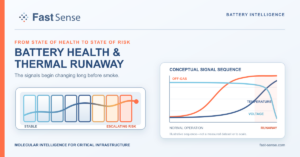
Battery Fire Safety Getting Crititcal

Laptop Battery Fire on American Airlines Flight Highlights the Need for Earlier Lithium-Ion Warning
A laptop battery fire aboard an American Airlines flight from Atlanta to Dallas has once again highlighted a fundamental challenge with lithium-ion batteries: **by the time smoke or fire is visible, a battery failure may already be well advanced.**
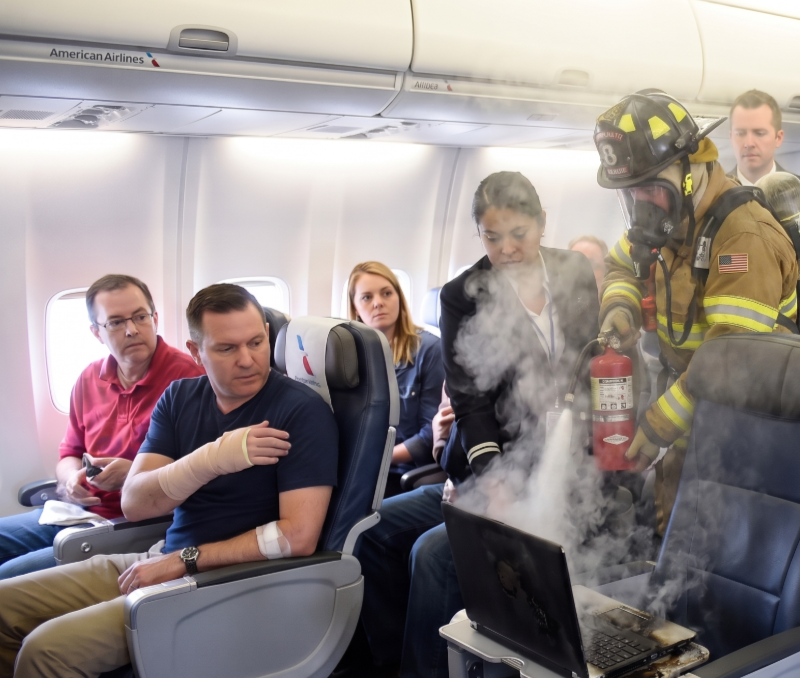
American Airlines Flight 2398 was approaching Dallas-Fort Worth International Airport when a passenger’s laptop began smoking and caught fire inside the cabin. The Airbus A321 was carrying approximately 133 people.
Cabin crew responded quickly and contained the device using a thermal containment bag. The aircraft landed safely, although the pilot reported that several passengers may have suffered burns to their hands. One passenger was subsequently treated and released.
The incident is now being investigated by the Federal Aviation Administration (FAA).
Lithium-Ion Battery Fires Are Not Isolated Events
Lithium-ion batteries power everything from laptops and smartphones to electric vehicles, residential energy storage and multi-megawatt Battery Energy Storage Systems (BESS).
Their high energy density is one of their greatest advantages. It also creates a safety challenge.
If a lithium-ion cell becomes damaged, overheated, overcharged or develops an internal defect, it can enter a chain of degradation that may ultimately lead to **thermal runaway** — an uncontrolled rise in temperature that can result in venting, smoke and fire.
The FAA maintains a database of lithium-battery-related aviation events involving smoke, fire or extreme heat, demonstrating that battery failures in portable electronics are an ongoing safety concern.
But aviation is only one example of a much wider battery-safety challenge.
The Critical Question: Can We Detect Failure Before Smoke?
Traditional battery safety systems rely heavily on measurements such as:
* Temperature
* Voltage
* Current
* Smoke detection
These measurements remain essential, but they do not necessarily provide the earliest indication of every developing cell failure.
Before visible smoke or flames appear, deteriorating lithium-ion cells can undergo chemical reactions that produce and release gases.
Those molecules can provide another layer of information about what is happening inside the battery.
Instead of waiting for a battery to become sufficiently hot to trigger a temperature alarm — or for combustion products to reach a smoke detector — chemical sensing creates the possibility of identifying abnormal battery behaviour earlier in the failure sequence.
From Temperature Intelligence to Chemical Intelligence
This is where the next generation of battery monitoring can evolve.
Fast Sense is developing miniature sensing technology designed to add **real-time chemical intelligence** alongside conventional battery measurements.
Our Second Sight™ sensor technology is being developed to detect battery off-gassing and provide an additional early-warning layer at the cell, module, pack or system level.
AVIATION BATTERY SAFETY
Lithium Battery Incidents on Aircraft Are Rising
FAA-recorded lithium battery incidents involving smoke, fire or extreme heat have risen significantly in recent years.
In just five years, FAA-recorded lithium battery aviation incidents involving smoke, fire or extreme heat increased from 39 in 2020 to 97 in 2025.
Portable electronic devices, battery packs, laptops, mobile phones and other lithium-ion products are among the sources represented in the FAA incident database.
These incidents reinforce the importance of understanding the earliest warning signs of battery failure — including battery off-gassing , abnormal temperature and developing thermal runaway .
Source: U.S. Federal Aviation Administration — Lithium Battery Incidents . FAA notes that its database contains events known to the agency and should not be considered a complete listing of all incidents.
The objective is simple:
Detect the molecular warning signs of battery degradation as early as possible, identify where they are coming from and turn them into actionable information.
For large-scale energy storage, residential batteries, transportation and other high-value lithium-ion applications, additional warning time can potentially give safety systems and operators more opportunity to investigate, isolate or respond to an abnormal battery before the event escalates.
Battery Safety Needs to Move Further Upstream
The American Airlines incident ended with the crew successfully containing the burning device.
In a laptop, the battery is relatively small and accessible. In a large battery installation, thousands or even millions of cells may be packaged inside modules, racks and enclosures.
Finding a developing problem before it propagates can therefore become considerably more important.
The future of battery safety should not simply be about detecting a fire faster.
It should be about detecting the conditions leading towards failure earlier.
Temperature tells us something.
Voltage tells us something.
Molecules can tell us something too.
Fast Sense is developing Second Sight™ battery sensors to bring that additional layer of intelligence directly into batteries and energy-storage systems.
BATTERY SAFETY KNOWLEDGE CENTRE
Battery Safety FAQs: Lithium-Ion Fires, Air Travel, Storage & Off-Gassing
Find answers to common questions about lithium-ion battery safety, carrying batteries on planes, storing batteries at home, thermal runaway, battery off-gassing and the warning signs of battery failure.
Fast Sense develops battery safety sensors designed to add chemical intelligence alongside conventional voltage, current and temperature monitoring. Our technology focuses on detecting molecular indicators associated with battery off-gassing and earlier-stage battery degradation before a failure develops into smoke, fire or thermal runaway .
Are lithium-ion batteries safe?
Yes. Lithium-ion batteries are generally safe when they are manufactured, charged, stored and used correctly. However, damaged, defective, overheated or improperly charged batteries can fail and, in some cases, enter thermal runaway .
Warning signs of battery failure can include unusual heat, swelling, hissing, unusual smells, leaking, abnormal charging behaviour, gas release or smoke.
Can I carry lithium batteries on a plane?
Yes. Most consumer devices containing lithium-ion batteries, including smartphones, laptops, cameras and tablets, can normally be carried on commercial aircraft.
Spare lithium batteries and power banks should generally be carried in your hand luggage rather than checked baggage. Battery terminals should be protected from accidental short circuits.
For current US aviation requirements, see the FAA guidance for carrying batteries on aircraft .
Can I put lithium batteries in checked luggage?
Spare lithium-ion batteries and power banks are generally not permitted in checked baggage and should normally be transported in carry-on luggage.
Electronic devices containing installed batteries may be permitted in checked luggage under certain conditions, but they should be protected against damage and accidental activation.
Always verify the latest battery rules with your airline before flying.
Can I carry batteries in my hand luggage?
Yes. Many common consumer batteries can be transported in hand luggage, and spare lithium-ion batteries are generally required to travel in the aircraft cabin rather than checked baggage.
Loose batteries should be individually protected so their terminals cannot come into contact with keys, coins or other conductive objects.
Is it safe to carry a loose battery in your pocket?
Carrying an unprotected loose battery in a pocket is not recommended, particularly if the pocket also contains keys, coins or other metal objects.
Conductive objects can connect the battery terminals and create a short circuit, potentially causing rapid heating, burns, venting or fire.
Loose batteries should be kept in their original packaging or an appropriate battery storage case.
Can batteries catch fire inside a bag?
Yes. A battery can potentially overheat or catch fire inside a bag if it is damaged, crushed, defective, exposed to excessive temperatures or accidentally short-circuited.
Loose batteries should be protected from metal objects and lithium-ion devices should not be used if their batteries are swollen, damaged or unusually hot.
What is the 40–80 rule for batteries?
The 40–80 battery rule is a battery-longevity guideline suggesting that lithium-ion batteries are kept between approximately 40% and 80% state of charge where practical.
Avoiding prolonged periods at 0% or 100% charge can help reduce some forms of lithium-ion battery ageing. The 40–80 rule is mainly about battery life rather than being a strict battery-safety requirement.
How likely is a lithium-ion battery fire?
Lithium-ion battery fires are relatively uncommon compared with the enormous number of batteries used worldwide every day. However, when a battery does fail, the large amount of stored energy can make the event serious.
Battery fire risk can increase because of manufacturing defects, physical damage, internal short circuits, overheating, inappropriate charging, ageing or other abnormal operating conditions.
What causes lithium-ion battery fires?
Common causes of lithium-ion battery failure can include:
- Internal electrical short circuits
- External short circuits
- Physical damage, crushing or puncturing
- Manufacturing defects
- Excessive temperatures
- Electrical abuse or inappropriate charging
- Cell degradation and ageing
- Thermal propagation from another cell
In some failure scenarios, chemical reactions can also generate gases before visible smoke or fire develops.
Can a lithium-ion battery release gas before a fire?
Yes. Under certain abnormal or abusive conditions, lithium-ion cells can release gases before visible smoke, flames or full thermal runaway occurs.
The gases produced and the timing of their release depend on factors including battery chemistry, state of charge, temperature and failure mode.
This makes battery off-gas detection an important additional monitoring method alongside voltage, current, temperature and conventional fire detection.
What are the warning signs of a lithium-ion battery fire?
Possible warning signs of lithium-ion battery failure include unusual heat, swelling, deformation, hissing, popping noises, unusual odours, leaking, abnormal charging behaviour, gas release and smoke.
A swollen, damaged, smoking or unusually hot battery should not continue to be charged or used.
Is lithium battery smoke toxic to humans?
Smoke and gases released during a lithium-ion battery fire can be hazardous and should not be inhaled.
Battery failures can release a complex mixture of gases, vapours and particulates. The substances released vary depending on battery chemistry, temperature and the conditions of the failure.
Why are alkaline batteries sometimes not recommended?
Alkaline batteries are suitable for many devices, but they may not be ideal for every application.
Rechargeable batteries can be more appropriate for high-drain or frequently used equipment. Older or deeply discharged alkaline batteries can also leak, potentially damaging the device in which they are installed.
Can you detect battery failure before it catches fire?
In some failure scenarios, changes can occur before visible smoke or flames appear. These can include abnormal voltage, temperature changes, unusual electrical behaviour and the generation or release of gases.
Pre-smoke battery detection can add another layer of information alongside voltage, current, temperature and smoke detection.
Fast Sense develops battery gas sensor technology designed to monitor molecular indicators associated with battery off-gassing.
The goal is to help identify abnormal battery behaviour earlier, understand where it originates and turn molecular measurements into actionable battery intelligence.
What is the best way to improve lithium-ion battery safety?
Effective lithium-ion battery safety relies on multiple layers of protection rather than one individual sensor or technology.
- Battery Management Systems (BMS)
- Voltage and current monitoring
- Temperature monitoring
- Electrical protection
- Appropriate charging controls
- Battery off-gas detection
- Smoke and fire detection
- Thermal management
- Emergency response systems
Increasingly, the objective is not simply to detect a battery fire faster, but to identify abnormal battery behaviour before the event reaches smoke, fire or thermal runaway.
Learn more about Fast Sense battery safety sensors for BESS and energy storage .
Latest Posts

Navigating BESS Insurance: How to Handle Risk Assessments When Thermal Runaway Cover Shrinks
September 24, 2026