We’ve Raised $2.2M to Accelerate Next-Generation Gas Sensing
Fast Sense has been quietly building.
Over the past two years, we’ve secured $2.2M through a milestone-based 3-year incubation program, where funding is tied to annual technical and commercial progress.
During this period, we advanced our hydrogen and multi-gas sensor chip platform for critical energy infrastructure — including hydrogen pipelines, battery safety, transformers, and industrial gas monitoring.
We are now entering the next phase: commercial pilots, strategic partnerships, and scale-up.
As part of this next stage, Fast Sense is preparing a new investment round and is looking to connect with strategic investors, industrial partners, and energy infrastructure leaders who share our vision for real-time gas intelligence.
If this is relevant to you or your network, I’d be happy to connect.
This marks an important step forward—not just for our company, but for the future of gas sensing in the hydrogen economy, oil & gas, transformers, and battery systems.
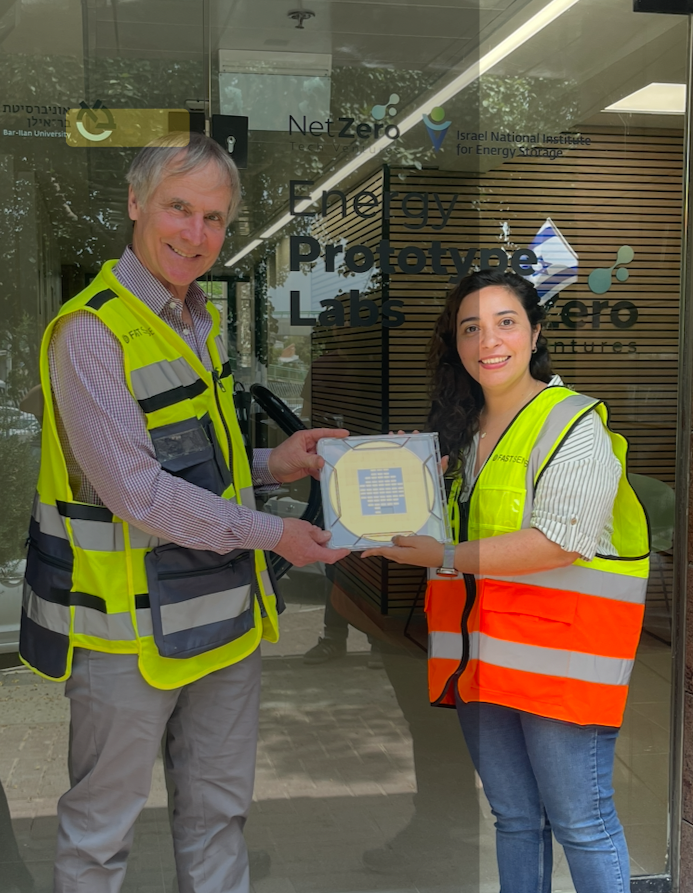
From R&D to Market-Ready Products
This funding will allow us to move decisively from advanced R&D into market-ready products.
Our focus over the coming period is clear:
- Finalizing commercial-grade instruments based on our core sensing technology
- Expanding beyond hydrogen into methane and VOC detection
- Delivering solutions tailored for real-world industrial environments
At the same time, we are establishing our own laboratory infrastructure, enabling us to:
- Accelerate development cycles
- Validate performance under real operating conditions
- Continuously improve our sensing platform
The why – A Critical Advantage: No Cross-Sensitivity
One of the biggest challenges in gas sensing—especially at low concentrations—is cross-sensitivity.
Traditional sensors often struggle to distinguish between gases, leading to:
- False readings
- Reduced accuracy
- Limited usability in complex environments
Fast Sense addresses this directly.
Our technology is designed to deliver high selectivity with no cross-sensitivity, even at low ppm levels of hydrogen.
This enables:
- Earlier detection of leaks
- More reliable data in mixed-gas environments
- Better decision-making for operators
In industries where safety and precision are critical, this is a fundamental shift.
Entering Year 3 of Our Journey
This funding also comes at a meaningful moment in our journey.
We are now entering the third year of a structured three-year program, having successfully:
- Achieved key technical and validation milestones in Year 1
- Demonstrated performance in real-world pilot environments in Year 2
With these foundations in place, Year 3 is about checking everying fits:
- Turning prototypes into deployable products
- Expanding use cases across industries
- Preparing for broader commercial rollout
Ready to invest?
Latest Posts
Navigating BESS Insurance: How to Handle Risk Assessments When Thermal Runaway Cover Shrinks
September 24, 2026